When it comes to Lotto Max, many players believe the results are completely random. While the outcome is technically random, a closer look at historical data reveals recurring statistical patterns that appear far more often than expected.
Understanding these Lotto Max patterns won’t guarantee a win, but it can help you see how numbers are actually distributed across draws.
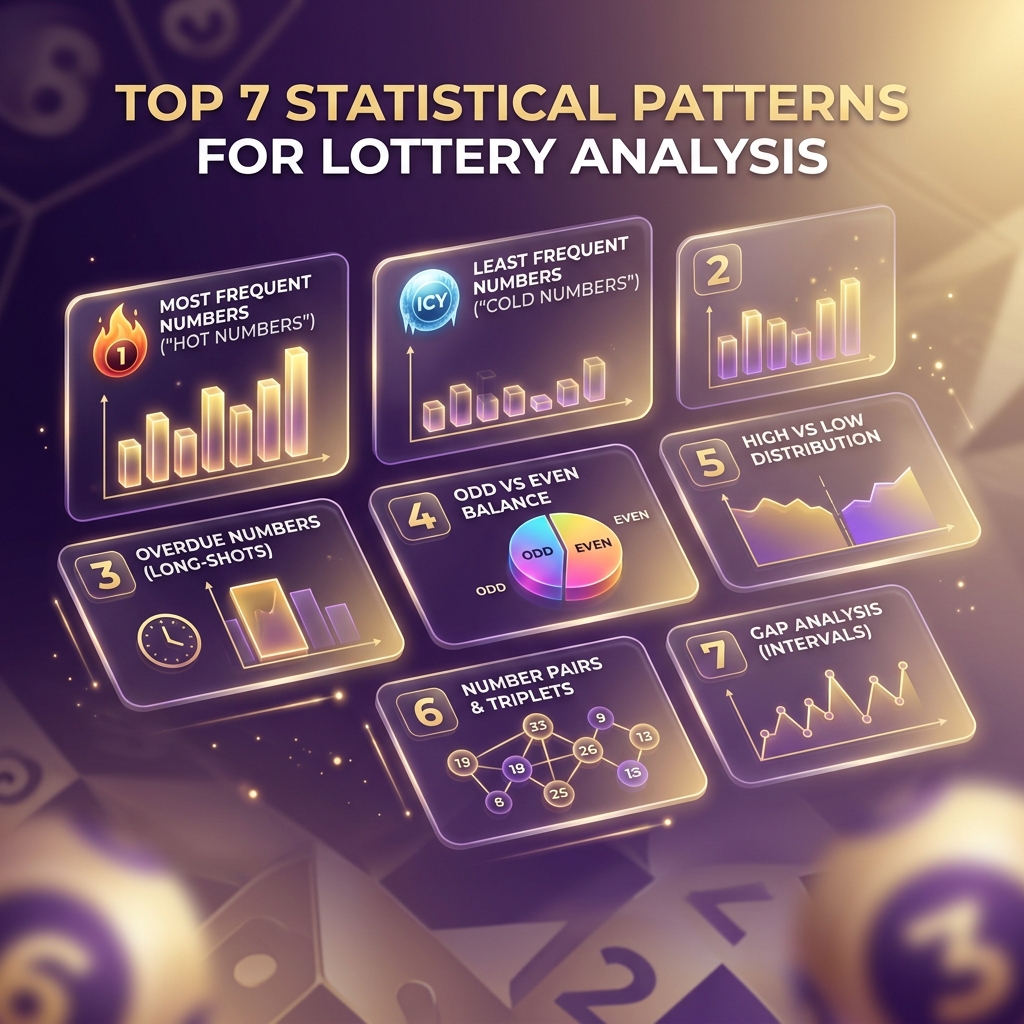
Here are the top 7 Lotto Max patterns you must know.
- Number Clustering Happens Frequently
One of the most common Lotto Max patterns is clustering. Numbers often appear close to each other rather than being evenly spread.
- Examples: 6, 7 or 29, 30
This shows that consecutive or near-consecutive numbers are more common than most players expect. Key insight: Numbers are not evenly distributed — they cluster.
- Even and Odd Numbers Stay Balanced
Most Lotto Max draws maintain a balance between even and odd numbers.
- Typical distribution: 3 Even / 4 Odd or 4 Even / 3 Odd
Extreme imbalances (like 6:1) happen, but they are less frequent. Key insight: A balanced even/odd ratio appears in the majority of draws.
- Mid-Range Numbers Dominate
Numbers between 20 and 40 appear more frequently than extreme low or high numbers.
- Example: 23, 25, 29, 30, 38
This mid-range dominance is one of the most consistent patterns in Lotto Max history. Key insight: The mid-range zone is often the “core” of the draw.
- Hot and Cold Numbers Always Mix
Lotto Max draws usually include a combination of:
- Hot numbers (frequently drawn recently)
- Cold numbers (not drawn for a long time)
Most combinations are not purely hot or purely cold. Key insight: Balanced mixes appear more often than extreme cases.
- Numbers Spread Across Multiple Ranges
Winning combinations typically include numbers from different ranges:
- Low (1–10)
- Mid (11–30)
- High (31–50)
A common structure looks like: 2 low + 3 mid + 2 high. Key insight: Numbers are distributed across ranges, not concentrated in one area.
- Consecutive Numbers Appear More Often Than Expected
Many players avoid consecutive numbers, assuming they are rare. In reality, they appear quite frequently.
- Examples: 6 and 7, 29 and 30
Key insight: At least one consecutive pair appears in a large percentage of draws.
- Spacing Patterns Matter
The spacing between numbers often follows a pattern:
- Tight clusters (small gaps)
- Larger jumps between groups
Example: 6 → 7 (tight gap) leading to 7 → 23 (large gap). Key insight: Draws combine both tight clusters and wide gaps.
Final Insight: Lotto Max Is Structured Randomness
Lotto Max is random by design, but it consistently shows structured statistical behavior. These 7 patterns appear repeatedly, forming the hidden structure behind the results.
What You Should Do Next
Instead of choosing numbers randomly, focus on patterns:
- Include at least one consecutive pair
- Maintain even/odd balance
- Select numbers across multiple ranges
- Combine hot and cold numbers
These approaches align with how numbers actually appear in Lotto Max draws.
Disclaimer: Past results do not influence future outcomes. This analysis is historical and for educational purposes only.